

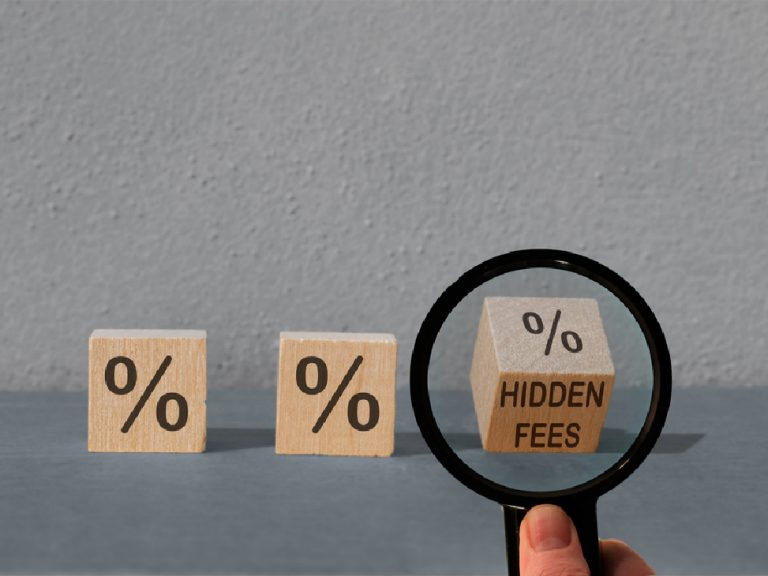
No-fee loans present themselves as a new era in consumer-friendly lending — a transparent, simple, and cost-effective borrowing solution. But behind the appealing “no fees” marketing lies a more complex reality involving interest restructuring, borrower psychology, and cost-shifting mechanisms that are anything but obvious. This in-depth article unpacks how no-fee loans really work, the silent pricing model behind them, and whether they actually benefit borrowers in real-world financial scenarios.
No-fee loans have exploded in popularity across bank lending, credit unions, fintech platforms, and peer-to-peer lending ecosystems. They are marketed aggressively with headlines like:
- “No origination fee!”
- “No application fee!”
- “No processing fee!”
- “Zero hidden charges!”
To the average borrower, it sounds refreshing — a clean loan with no surprise costs. After decades of banks nickeling-and-diming borrowers with fees, a no-fee loan feels like progress.
But while fees may vanish from the surface, costs don’t disappear — they move.
Lenders aren’t charities. They don’t eliminate revenue — they reposition it.
What Is a No-Fee Loan? Understanding the Claim
A no-fee loan means:
- no application fees
- no origination fees
- no underwriting fees
- no documentation fees
- no disbursement fees
So yes — these specific line-item costs are truly removed.
But — that does not mean the lender earns less money.
Instead of charging fees up front, lenders shift cost into:
- interest rates
- long-term repayment
- compounding structures
- penalty schedules
The loan looks cleaner — but the math often becomes dirtier.

Case Study: Two Borrowers, Same Loan… Different Reality
Borrowers often look at marketing, not math.
Let’s compare two borrowers taking $10,000 loans:
Borrower A: Standard Loan with Fees
- Interest rate: 10%
- Origination fee: 3% ($300)
- Total lifetime interest: ~$1,600
- Total cost: $1,900
Borrower B: No-Fee Loan
- Interest rate: 13%
- Origination fee: $0
- Total lifetime interest: ~$2,400
- Total cost: $2,400
Even though Borrower B avoided the $300 fee…
They still end up paying around $500 more total due to a higher interest rate.
This is the rule of no-fee loans:
You pay less up-front, more over time.
Lenders learned long ago that borrowers hate immediate pain
…but will tolerate long-term pain.
How Lenders Actually Profit From No-Fee Loans
Here’s where the “no fee” illusion becomes transparent.
Instead of fees, lenders often:
- increase the APR
- shorten grace periods
- tighten late-payment windows
- apply interest daily vs monthly
- create penalty-heavy repayment terms
- limit early-payoff benefits
- embed micro-charges in interest structure
And they never advertise this.
Instead, they emphasize:
ZERO FEES!!!
Borrowers see the word “free.”
Lenders smile at the earned interest.
Why No-Fee Loans Convert Borrowers So Easily
It comes down to buyer psychology and behavioral economics.
Borrowers see:
“No fees!”
They think:
“No risk!”
Meanwhile, lenders know:
- People hate upfront costs
- People underestimate long-term interest
- People make emotional borrowing decisions
- People focus on monthly payment, not total repayment
If a loan feels painless now…
…it becomes incredibly profitable later.
Is a No-Fee Loan EVER Truly Cheaper?
Yes — and this is where nuance matters.
A no-fee loan CAN be a smart choice when:
- the interest rate is equal or lower than competitors
- the borrower repays early
- the term is short
- the loan is small
- the borrower never misses payments
- there are no hidden clauses
Example:
A $3,000 no-fee loan at 9%
may cost less than a $3,000 loan at 7% with a $200 origination fee — if repaid rapidly.
But you must do total cost analysis — not payment analysis.
The Mistake 90% of Borrowers Make
They ask:
“What is the MONTHLY payment?”
They should ask:
“What is the TOTAL amount I will pay back?”
Lenders engineer monthly numbers to seem low.
Borrowers think:
“$197 per month — I can afford that!”
Instead of adding:
$197 × 60 months = $11,820 paid for a $7,500 loan.
Monthly-payment thinking is the oldest borrower trap.
The One Question That Exposes Hidden Cost
When evaluating a no-fee loan, look the loan officer (or online lender) straight in the metaphorical eye and ask:
“What is the total cost of this loan over its entire repayment timeline?”
This question:
- forces transparency
- bypasses marketing language
- reveals interest exploitation
- shifts power to borrower
It is the single most valuable sentence in loan conversation.
The Red Flags That a No-Fee Loan Is Actually More Expensive
Watch closely for:
- noticeably higher APR
- emphasis on “no fees” instead of interest
- minimal or hidden disclaimers
- complicated contract terms
- prepayment restrictions
- late-payment penalties
- forced autopay clauses
- loan terms longer than necessary
Borrowers must recognize that ANY lender can hide cost — not in fees, but in time.
When a No-Fee Loan Makes Strategic Sense
A no-fee loan is beneficial when:
- you only need funds short term
- you will repay in under 12–18 months
- you prioritize cash-flow in the immediate term
- your current liquidity matters more than long-term cost
- you understand your repayment ability clearly
Example:
You need $3,500 for a vehicle repair but know you’ll pay it off in 6 months.
In that case, a no-fee loan with slightly higher interest?
Not a big problem.
But for long-term borrowing?
It can be painful.
How to Compare Loans the Smart Way (Checklist)
Always compare:
- APR (not just interest rate)
- repayment term
- total repayment amount
- early-payment policy
- compounding schedule
- daily vs monthly interest accrual
- late fee structure
- minimum vs extra-payment allowance
This comparison method
will literally save you money.
What Americans Are Asking About No-Fee Loans (Top FAQs)
1. Are no-fee loans really free?
No — the cost is usually shifted to interest.
2. Why would lenders remove fees if it decreases revenue?
It doesn’t — it just transforms revenue into interest.
3. Are no-fee loans better for short-term borrowing?
Yes — especially if repaid quickly.
4. Do no-fee loans impact credit score differently?
They affect credit the same way as fee-based loans.
5. Should I choose a no-fee loan over a low-interest fee-based loan?
Depends on total cost — not marketing language.
6. Can lenders punish early repayment?
Some do — via prepayment penalties or interest gating.
7. Do lenders use no-fee loans to attract high-interest borrowers?
Yes — especially subprime applicants.
8. How do I determine if a no-fee loan is a scam?
Compare total repayment vs other options.
9. Are no-fee loans a good emergency solution?
Often yes — because you get full disbursement.
10. What is the smartest mindset when evaluating loans?
Math-focused, not emotional.
Final Takeaway: Look at the Math, Not the Marketing
The real truth about no-fee loans is not that they are bad — but that they are misunderstood.
“No-fee” doesn’t mean
“no-profit for the lender.”
It means
“we’re charging you differently.”
Borrowers who analyze monthly payments get manipulated.
Borrowers who analyze total repayment get empowered.
The most successful financial decision-makers know:
The cost of money is not measured today —
it’s measured over time.
The difference between emotional borrowing and strategic borrowing?
Thousands of dollars.