


Artificial Intelligence (AI) is quietly revolutionizing how Americans search for, evaluate, and buy homes. From AI-driven pricing predictions to personalized property recommendations, it’s transforming every step of the home-buying process. With over 39% of prospective U.S. homebuyers already using AI tools, understanding this trend is now essential for anyone entering the housing market in 2025.
What Does “AI in Home-Buying” Actually Mean?
When we talk about AI in real estate, we’re referring to advanced technologies such as machine learning, predictive analytics, and automation tools that help streamline and personalize the home-buying journey.
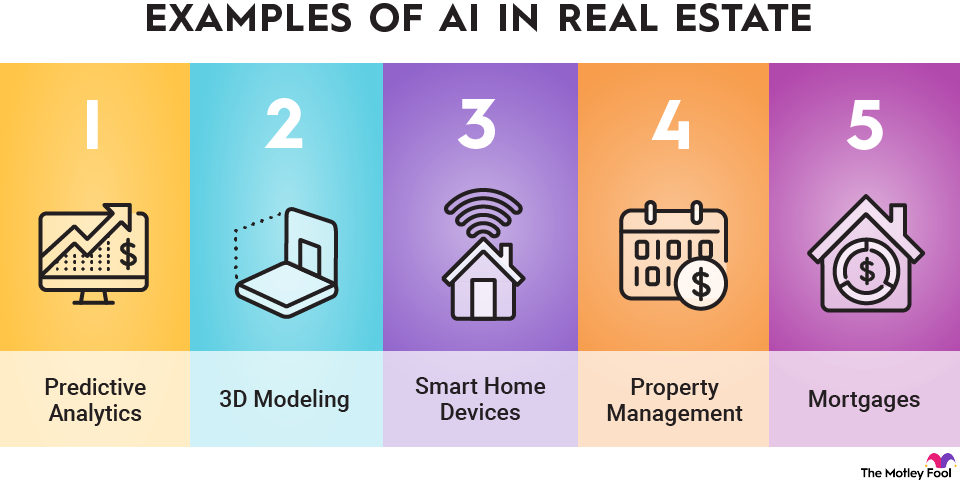
These systems assist with everything from finding listings and analyzing neighborhoods to estimating property values, predicting appreciation, guiding mortgage approvals, and even automating closing paperwork.
Most buyers don’t even realize how much AI is already embedded in their experience — many leading apps and websites now use AI behind the scenes to filter listings, detect fraud, and tailor search results to your lifestyle and preferences.
According to a recent report by Veterans United Home Loans (2025), 39% of U.S. prospective buyers have already used AI tools in their home search — up significantly from 34% just one quarter earlier.
Why Is This Change Happening Now?
The rapid acceleration of AI adoption in the real estate market can be traced to several factors:
- Market Size Explosion: The global AI-in-real-estate market grew from $222.6 billion in 2024 to an expected $301.5 billion in 2025, reflecting a 35.5% compound annual growth rate (CAGR). (Source: The Business Research Company, 2025)
- Broker Adoption: Around 75% of U.S. brokerages have adopted or are integrating AI into their operations — from lead routing and valuation tools to smart content generation. (Forbes Tech Council, 2024)
- Buyer Expectations: Modern consumers expect speed, transparency, and personalization in every online experience — including buying a home.
- Data Availability: Property records, satellite imagery, environmental data, and public records are now digitized, giving AI algorithms the raw material they need to make accurate predictions.
In short, AI isn’t coming to real estate — it’s already here, and buyers who ignore it risk missing key opportunities.

Real-Life Example: Sarah and Mike’s AI-Assisted Home Search
Consider Sarah and Mike, a young couple relocating to Charlotte, North Carolina, for work. They wanted a three-bedroom home near good schools, a short commute, and space for their dog.
Instead of scrolling through hundreds of listings, they used an AI-powered home-search platform. After they input details like commute time, hobbies, and backyard size preferences, the algorithm instantly produced five listings that matched not only their budget but also their lifestyle — including one in an up-and-coming neighborhood they hadn’t considered.
During their tour, their agent showed them an AI-generated neighborhood heat map displaying five-year value growth projections, school quality trends, and even flood-risk zones. The app also calculated how remodeling their kitchen could increase resale value by 6%.
Meanwhile, the seller’s agent used AI tools to virtually stage the property, write optimized listing descriptions, and set the ideal listing price. The result? Sarah and Mike closed in 42 days — under budget and with greater confidence, thanks to AI-enhanced insights.
Where Is AI Making the Biggest Impact in Home-Buying?
AI is reshaping nearly every stage of the home-buying process. Here’s how:
1. Property Search & Matching
- AI understands buyer intent beyond basic filters like “3 beds, 2 baths.”
- It analyzes behavior, lifestyle, and preference patterns to recommend homes that truly fit.
- Pain Point Solved: Endless scrolling through irrelevant listings.
- Pro Tip: Choose AI-powered apps with “Smart Match” or “Lifestyle Filters” options.
2. Valuation & Pricing Predictions
- AI leverages historical sales data, zoning changes, tax records, and risk models to predict accurate pricing.
- Businesses using AI tools have seen 7.3% higher productivity and 5.6% greater operational efficiency. (Brainvire Research, 2025)
- Pain Point Solved: Fear of overpaying or buying in a declining area.
3. Neighborhood & Risk Analysis
- Modern AI can reveal crime rates, school rankings, commute patterns, and even climate risk forecasts.
- Pain Point Solved: Hidden downsides in seemingly “perfect” neighborhoods.
4. Agent Efficiency & Lead Handling
- Agents using AI-driven CRM systems respond faster, predict buyer needs, and automate scheduling.
- 89% of real-estate professionals now say AI is essential to remain competitive. (artsmart.ai, 2025)
- Buyer Advantage: Faster communication, better matches, and stronger negotiation prep.
5. Marketing, Staging & Listing Optimization
- Sellers now use AI to create virtual staging, enhance listing photos, and run A/B tests on descriptions to target the right audience.
- Buyer Tip: Always verify virtual staging with a live or video tour to avoid surprises.
What Does This Mean for Buyers?
In practical terms, AI has made home-buying:
- More data-driven: Buyers can now access the kind of analytics once reserved for big investors.
- More personalized: Recommendations are tailored to lifestyle, not just price or square footage.
- Faster: AI cuts down research time dramatically.
- Potentially riskier: Over-reliance on data without human judgment can lead to missteps if models are biased or incomplete.
Pro Tip:
Use AI to inform your decisions, not make them for you. Always validate findings with a trusted agent or independent appraiser.
Actionable Checklist for 2025 Homebuyers
Here’s how to harness AI without losing the human touch:
- ✅ Use AI-powered platforms that ask about commute, lifestyle, and long-term goals.
- ✅ Ask your agent what AI tools they use for pricing, risk assessment, and client matching.
- ✅ Request an AI-generated property valuation report to compare with local comps.
- ✅ Inspect homes in person — virtual staging can look better than reality.
- ✅ Review AI-based neighborhood data (school ratings, transit access, climate risks).
- ✅ Keep your intuition and emotional insight active.
10 Frequently Asked Questions About AI in Home-Buying
1. What percentage of homebuyers use AI tools in 2025?
Around 39% of U.S. buyers report using AI tools during their home search. (Veterans United Home Loans, 2025)
2. Will AI replace real estate agents?
No. AI enhances efficiency but can’t replace human negotiation skills, empathy, or local knowledge. The best results come from human-AI collaboration.
3. How accurate are AI-based valuations?
AI can estimate property values within a few percentage points when data is high-quality, but local market nuances still require human expertise.
4. Are there risks in relying on AI?
Yes — data bias, misleading virtual staging, and overconfidence in models are real concerns. Always verify with inspections and professional opinions.
5. Does AI make homes more expensive?
In some cities, yes. Faster matching and higher competition from AI-assisted buyers can drive up demand. (MarketWatch, 2025)
6. Can AI find homes based on lifestyle rather than price?
Absolutely. Modern systems let you specify commute time, outdoor space, or even sunlight exposure, and they’ll recommend accordingly.
7. What if the AI recommendations don’t feel right?
Trust your instincts. Use AI as a guide, but don’t ignore your gut feelings or personal research.
8. Do all brokerages use AI now?
Not all, but adoption is rising fast — roughly 75% of U.S. brokerages now use AI tools for efficiency and analytics. (Florida Realtors, 2025)
9. Can AI actually reduce risk when buying a home?
Yes — AI helps uncover red flags like flood zones or value stagnation. Still, you should verify all findings manually.
10. How can I stay updated on AI in real estate?
Follow real-estate tech blogs, ask your agent about their tools, and explore AI-driven platforms like Zillow, Realtor.com, and Redfin Labs.
Why This Matters for the Future of Home-Buying
AI is no longer optional in real estate — it’s becoming standard. Buyers who understand how to use it gain a measurable edge in decision-making, negotiation, and market timing.
Looking ahead:
- Generative AI will soon automate property reports, renovation ROI estimates, and mortgage pre-qualifications. (McKinsey, 2025)
- Climate-risk analytics will shape property values more than ever.
- Ethical and transparent use of AI will become a major trust factor between agents and clients.
Those who adapt early will buy smarter, faster, and with greater confidence.
Final Thoughts
Artificial intelligence is quietly reshaping how Americans buy homes — and it’s doing so in ways that most people don’t even notice. From matching the perfect neighborhood to forecasting market trends, AI empowers buyers to make better decisions while saving time and reducing uncertainty.
But the golden rule remains: use AI as an assistant, not a decision-maker. The combination of human intuition + AI data creates the most powerful home-buying strategy in 2025 and beyond.
So, next time you start your home search, don’t just rely on luck or listings — rely on smart technology working behind the scenes to get you home faster, smarter, and more confidently.