

Personal loan interest rates have climbed rapidly due to inflation, Federal Reserve monetary policy, rising consumer risk, and market uncertainty. Many Americans are paying far more in interest than they realize — or finding that borrowing has become significantly more expensive. This article explains why personal loan rates are soaring, how the lending system behind them actually works, and most importantly, how to secure a low rate while it’s still possible.
Personal loans used to be a reasonably affordable financial tool. A few years ago, many Americans could secure rates between 9–12%, especially if they had decent credit. Now, borrowers are seeing personal loan rates quoted at 16%, 20%, and even 28% — sometimes regardless of strong credit history or income level.
Thousands of borrowers are asking the same question:
“Why are personal loan rates suddenly so high?”
The answer isn’t simple — because the causes are layered across economic policy, lending risk algorithms, and borrower behavior. But the solutions are surprisingly actionable once you understand them.
Let’s dive in.
Why Personal Loan Rates Are Increasing So Quickly
Borrowers tend to think rates are rising arbitrarily or because lenders “feel like charging more.” The truth is more structural and systemic.
1. The Federal Reserve Is Driving Rates Up
When the Fed increases interest rates to fight inflation, every institution that borrows money — banks, credit unions, online lenders — has higher cost of capital. That gets passed directly to you in the form of higher APR.
Borrowers feel the pain.
Banks shrug and say: “Just following policy.”
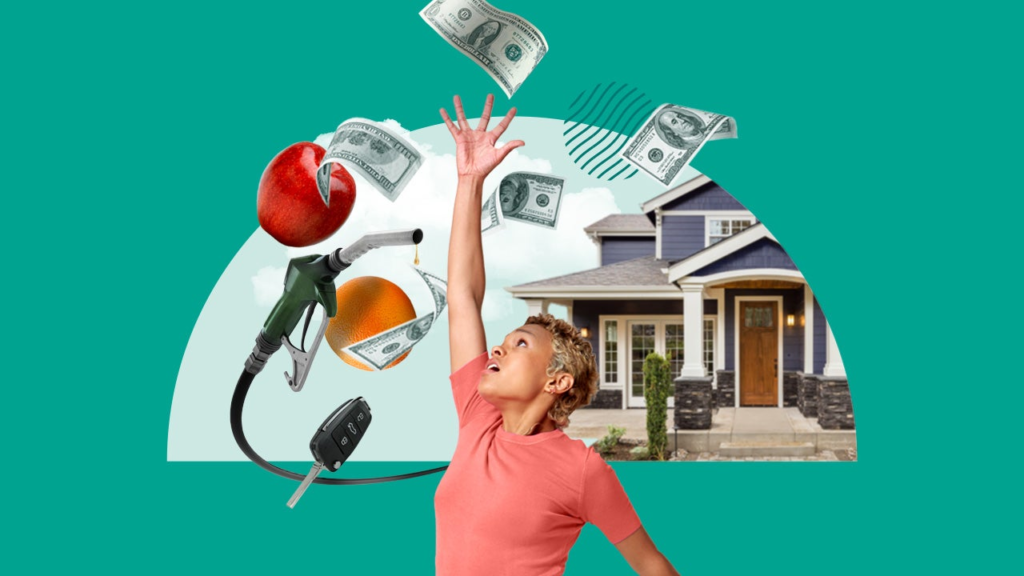
2. Inflation Has Changed Consumer Risk
When everyday costs rise:
- groceries
- fuel
- rents
- utilities
- medical bills
Consumers have less discretionary income, which increases default risk.
Lenders become more cautious — and price the risk into higher loan rates.
Borrowers think lenders are punishing them.
But lenders are actually protecting themselves.
3. Loan Delinquencies Are Rising Nationwide
More borrowers are missing payments — not just on personal loans, but also:
- credit cards
- auto loans
- Buy Now Pay Later services
- home equity lines
When delinquency trends rise, lenders must account for more expected losses, so they tighten lending models and push rates up.
4. Borrowers Are Asking for Longer Loan Terms
Here’s a little-understood mechanism:
When borrowers choose 4-to-6-year loan terms instead of 2-to-3-year terms…
interest compounds over a longer period.
But lenders reward shorter terms with lower rates, and penalize longer ones with higher rates.
Borrowers often mistakenly think:
“Lower monthly payment = better deal.”
No — lower total repayment = better deal.
5. Psychological Borrowing Behavior Has Shifted
Post-pandemic and during economic uncertainty:
- more borrowers are urgent
- more are emotionally-driven
- more are financially reactive
- more are borrowing out of panic rather than planning
And lenders know this.
When loan demand increases — especially demand driven by urgency — lenders raise pricing.
Borrowing behavior can literally drive market rates.
Is This the Worst Time to Take a Personal Loan?
Not necessarily.
But it is the worst time to take one blindly.
Borrowing smart matters more now than ever. Because while rates are rising generally, there are STILL ways to get a low rate — if you position yourself strategically.
For every borrower getting quoted 19%…
someone else with similar credit is getting 11%.
The difference isn’t luck.
It’s knowledge.
What Determines Your Personal Loan Rate — Really
Most borrowers assume it’s just credit score. But lenders use multiple factors:
- credit history
- debt-to-income ratio
- payment history
- income stability
- employment type
- existing open credit lines
- credit utilization
- loan term preferred
- lender underwriting policy
- algorithmic risk score
And one more thing that people rarely realize:
Rates are negotiable.
Banks don’t put that in ads — but it’s true.
7 Strategies to Lock in a Better Personal Loan Rate Now
This is where the actionable part begins.
1. Choose the Shortest Loan Term You Can Manage
A 3-year loan almost always carries a lower interest rate than a 4- or 5-year loan.
Shorter term = lower risk for lender
Lower risk = lower rate for you
Even if your monthly payment is higher, your total cost is dramatically lower.
2. Improve Your Credit Score — Even Slightly
Going from a 680 to a 705 can literally drop your APR by 3–4%.
That difference over a $10,000 or $20,000 loan can mean saving $1,500 to $5,000 of interest.
3. Apply at Credit Unions Before Banks
Credit unions are nonprofit financial institutions, and they can legally charge lower rates.
It’s common to see:
- Bank quote: 16.9%
- Credit union quote: 11.2%
Same borrower.
Different institution.
4. Get Multiple Loan Offers and Use Them as Leverage
Many borrowers don’t know this:
Applying to several lenders within a short period (typically 14 days) is treated as one credit inquiry for scoring purposes.
This allows:
- rate comparison
- negotiation
- counter-offer leverage
Example email you can send:
“Another lender has offered me 10.8%. Can you match or beat it?”
Banks do not volunteer their best rate —
they defend it when challenged.
5. Borrow While Your Financial Profile Is Strong
Everyone waits until they need cash urgently.
But lenders punish urgency.
If you’re:
- between jobs
- late on payments
- draining savings
- showing decreasing income
Your rate automatically spikes.
Borrowing while you have perceived strength yields better conditions.
6. Avoid “instant-approval” loan apps with predatory rates
They offer convenience.
But they charge for it.
These fintech micro-lenders often embed:
- inflated APR
- hidden processing fees
- “optional insurance” add-ons
- fast-access premium charges
- repayment penalties
Fast money is expensive money.
7. Request Manual Underwriting
Most loan approvals are automated.
But humans are more flexible than algorithms.
If you ask for a manual review, the lender may consider:
- job stability
- savings
- debt-payoff history
- future earning potential
- successful past loans
And they can lower your APR manually.
This one request alone has saved borrowers thousands of dollars.
Real-Life Example — A Borrower Who Saved $3,200 by Playing It Smart
Tessa, a digital consultant from California, needed $15,000 for business expansion.
Her first quote from a national bank was:
17.5% APR
Instead of accepting, she:
- applied to a credit union
- asked for a shorter loan term
- requested manual underwriting
- showed proof of steady income
- highlighted zero late payments in 7 years
- provided existing debt payoff history
Final approved offer:
10.9% APR
She saved over $3,200 in total repayment interest.
Same loan.
Same borrower.
Different strategy.

The 10 Most Common Questions Americans Are Asking About Rising Loan Rates
1. Why have personal loan rates increased so suddenly?
Due to the Fed’s rate hikes, inflation, and rising borrower risk.
2. Should I get a personal loan now or wait?
If your financial profile is strong now, borrow now — before conditions worsen.
3. Are rates going to drop soon?
Not likely in the short-term.
4. Is it better to borrow from a bank or a credit union?
Credit unions usually offer lower rates.
5. Does choosing a shorter term lower the interest rate?
Yes — substantially.
6. Is it worth improving my credit score before applying?
YES — small improvements can drastically reduce APR.
7. Can I negotiate interest rates?
Absolutely — especially with competing offers.
8. Do instant-approval apps charge more?
Almost always.
9. Should I get a variable-rate loan?
Generally no — rates may continue to rise.
10. Is paying off the loan early beneficial?
Yes — unless there’s a prepayment penalty.
Final Conclusion — Borrow Strategically, Not Emotionally
Personal loan rates are soaring not because lenders are greedy — but because the lending environment has become risk-inflated. However, borrowers who:
- understand how loan pricing works
- maintain strong financial profiles
- borrow proactively, not reactively
- negotiate their terms
- choose shorter repayment timelines
- leverage credit unions
- capitalize on manual underwriting
…can STILL secure excellent rates even in a high-rate era.
The difference between an uninformed borrower and a strategic one can literally mean thousands of dollars saved over the life of a loan.
Borrowing isn’t bad.
Borrowing blindly is.
Now you know how to borrow with clarity, leverage, and advantage.